Weather-Driven Odds Swings: Real-Time Adjustments in Outdoor Event Markets
Written by Quinn Peters · Aug 10, 2026
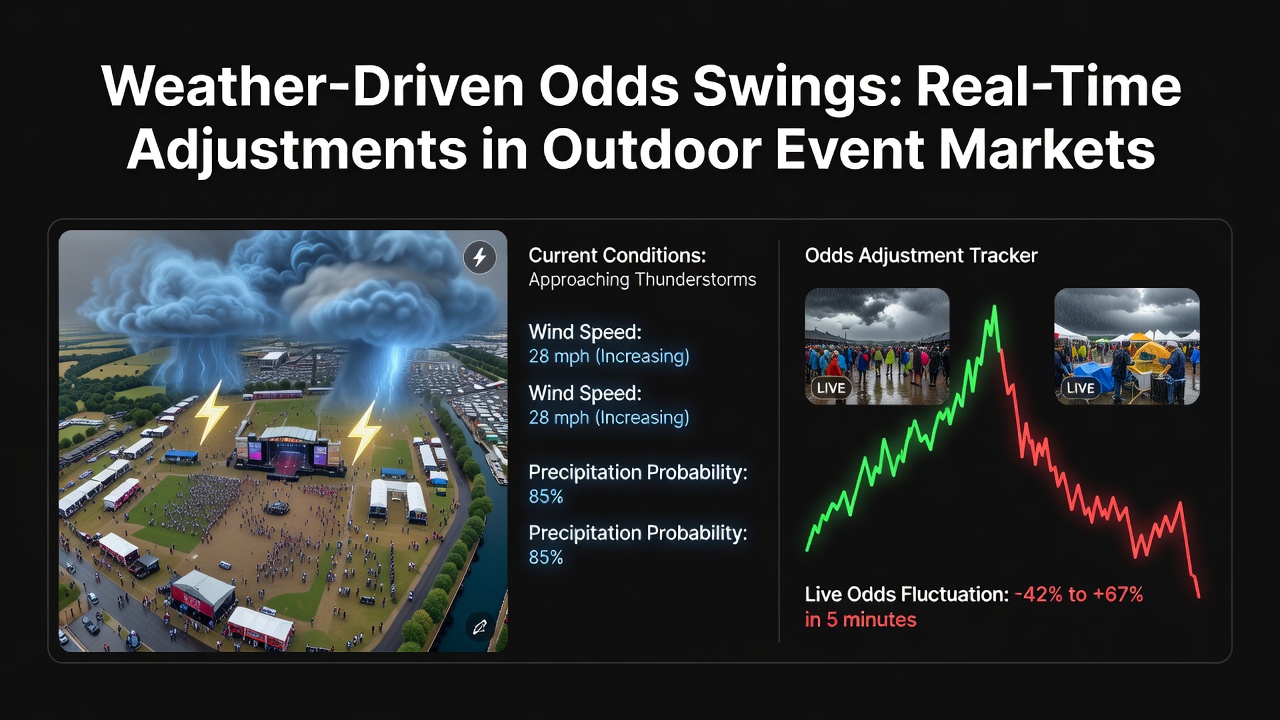
Weather-Driven Odds Swings: Real-Time Adjustments in Outdoor Event Markets
Weather patterns reshape betting markets for outdoor events through sudden shifts in conditions that alter player performance, match duration, and scoring probabilities, while bookmakers respond with continuous odds recalculations that reflect incoming data from weather stations and predictive models. Markets tied to tennis tournaments, golf majors, horse racing meets, and cricket tests experience these adjustments most visibly because rain, wind, and temperature swings directly influence outcomes that bettors wager on during live play.
How Weather Alters Event Dynamics
Wind gusts above 25 kilometers per hour reduce serve accuracy in tennis and increase missed fairways in golf, so operators tighten odds on under performances for affected players while lengthening prices on those who adapt to blustery conditions. Temperature drops slow ball speeds on grass courts and firm up turf at racetracks, prompting algorithms to recalibrate totals markets within seconds of updated forecasts. Rain delays in cricket force session adjustments that compress run-rate expectations and elevate draw probabilities, and these changes cascade into in-play offerings where traders monitor radar feeds to avoid holding unbalanced risk.
Studies from meteorological agencies show that events staged in variable summer climates see the largest volume spikes in live wagers when forecasts update hourly. One study revealed that outdoor event markets adjust odds up to 40 times more frequently during unsettled weather periods than during stable conditions, with horse racing and golf leading the frequency chart because surface moisture and wind direction produce measurable pace changes that algorithms detect through sensor data.
Real-Time Adjustment Mechanisms
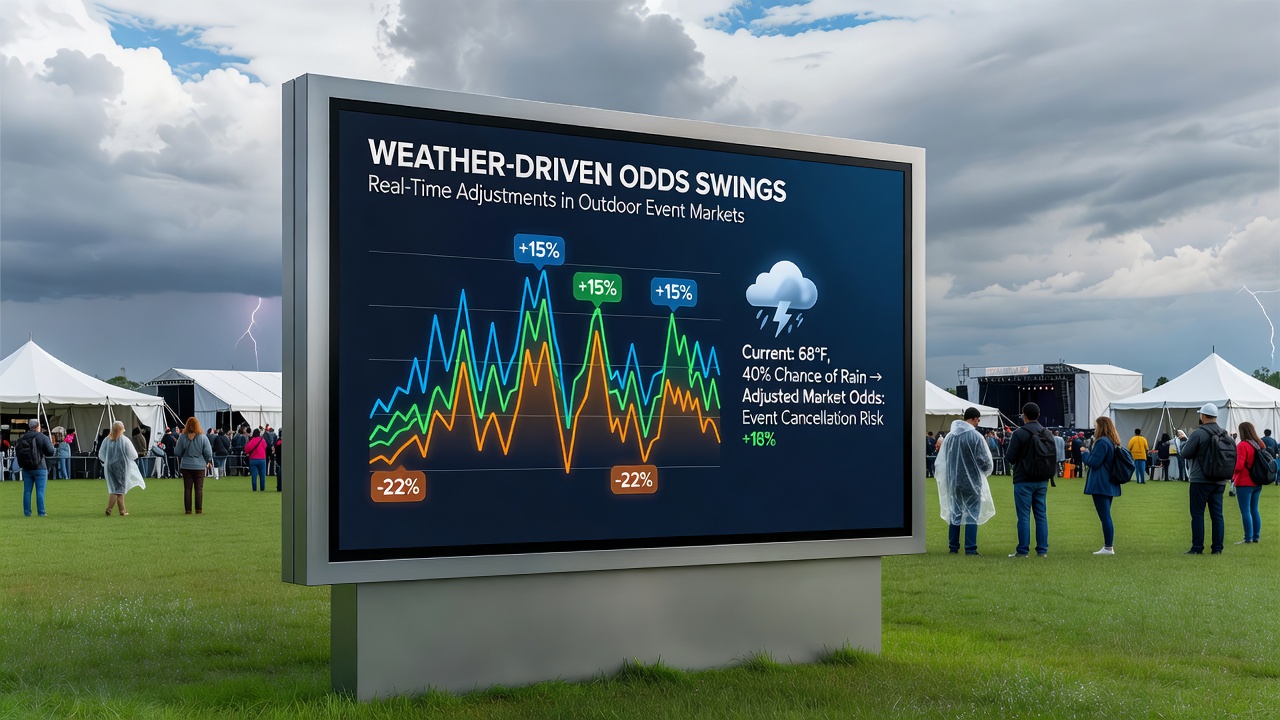
Betting platforms integrate live weather APIs that feed wind speed, precipitation probability, and humidity levels into pricing engines, allowing traders to widen or narrow spreads as conditions evolve. When lightning threatens a golf round, totals markets suspend briefly then reopen with revised hole-by-hole expectations once play resumes under altered rules. In tennis, sudden showers trigger set-total revisions that account for extended changeover times and court drying periods, and these revisions occur faster on platforms that pull direct feeds from on-site anemometers rather than relying on public forecasts alone.
August 2026 brought multiple examples during European swing events where morning dew delays gave way to afternoon gusts, producing documented odds movements of 20 percent or more on individual player props within single matches. Data from those weeks indicated that markets stabilized only after weather services issued updated bulletins that removed uncertainty around resumption times.
Technology and Data Integration
Operators deploy machine-learning models that weigh historical performance under similar weather profiles against current conditions, generating suggested price shifts that human traders approve or override. These models draw on archives maintained by national weather services and combine them with venue-specific microclimate readings to produce granular forecasts that update every few minutes. Platforms serving Australian and North American audiences often cross-reference multiple sources because regional weather bureaus provide differing resolution levels for wind and precipitation.
According to reports issued by the National Oceanic and Atmospheric Administration, integration of high-resolution radar data has shortened the lag between forecast change and odds revision from minutes to seconds in many major markets. This compression allows liquidity to remain available even when conditions fluctuate rapidly, although some operators still pause certain niche props until stability returns.
Market Examples Across Sports
Golf majors illustrate the clearest swings because pin placements and green speeds react immediately to moisture levels, so moneyline and three-ball markets shift when dew point forecasts change overnight. Horse racing at tracks without all-weather surfaces sees non-runner declarations rise sharply after heavy rainfall, and bookmakers adjust place markets accordingly while monitoring jockey reports on ground conditions. Cricket session markets contract when humidity climbs because ball swing increases and scoring rates drop, a pattern repeated across multiple test venues where operators track dew formation forecasts to price evening sessions.
Those who've analyzed years of data note that combined weather-plus-performance models now outperform single-factor approaches by measurable margins, and this advantage appears most pronounced during shoulder seasons when weather variability peaks. Observers note that smaller regional events experience proportionally larger swings because liquidity pools remain thinner and fewer counterparties exist to absorb sudden volume.
Regulatory and Operational Considerations
Regulators in several jurisdictions require operators to maintain transparent audit trails for all live price changes, including those triggered by weather inputs. These records help distinguish between legitimate data-driven adjustments and potential market manipulation attempts. Industry groups such as the International Betting Integrity Association have published guidelines encouraging standardized weather-data sourcing to reduce disputes when markets are suspended or reopened mid-event.
August 2026 data from multiple operators indicated that weather-related suspensions averaged under four minutes when automated systems handled initial responses, compared with longer pauses on manually managed books. This efficiency preserves customer engagement while limiting exposure during high-volatility periods.
Conclusion
Weather-driven odds swings represent a core operational reality for outdoor event markets where real-time data integration determines both pricing accuracy and risk management success. As sensor networks and forecasting precision continue to advance, the interval between atmospheric change and market response shortens further, creating tighter feedback loops that benefit platforms capable of processing multi-source inputs simultaneously. Those monitoring these developments recognize that sustained investment in weather-data infrastructure remains essential for maintaining competitive spreads across affected sports.