Satellite Feeds and Micro-Market Swings: How Real-Time Data Layers Reshape In-Play Football Decisions
Written by Taylor Lange · Oct 20, 2026
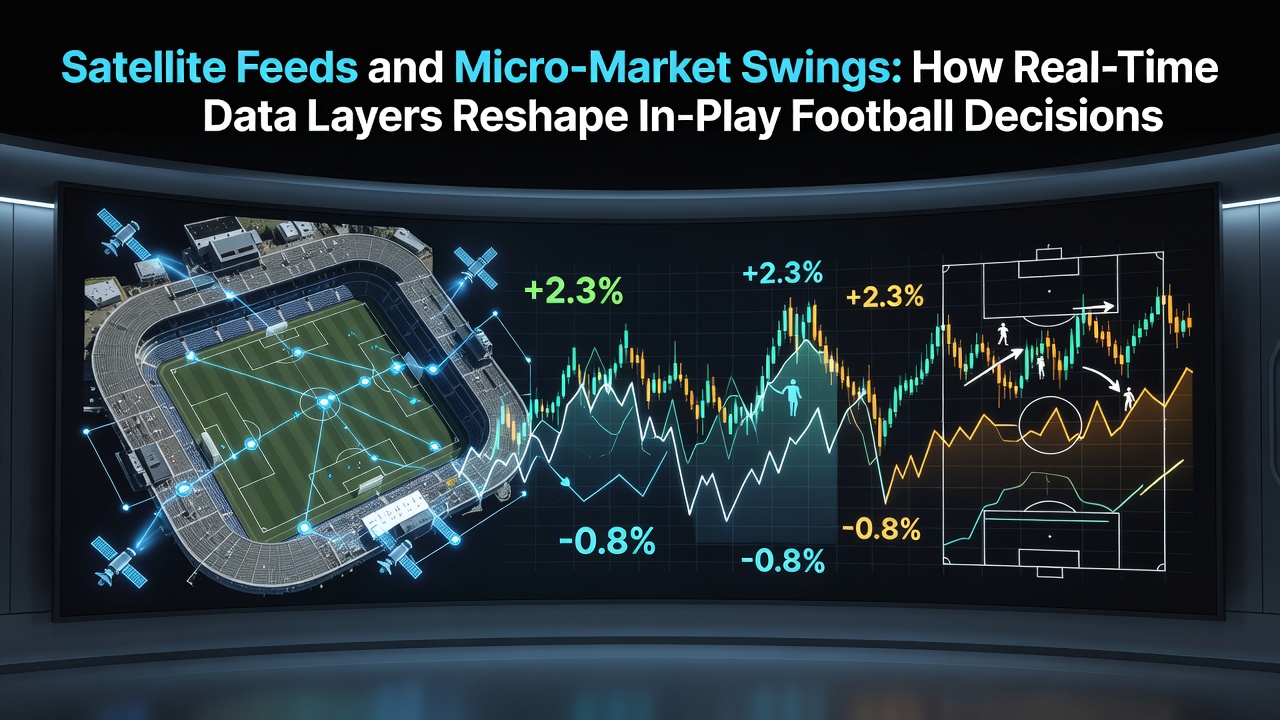
Satellite technology now supplies continuous layers of match data that feed directly into live betting platforms, allowing odds on specific events like the next corner or player substitution to adjust within seconds. Broadcasters and data providers capture high-resolution video from multiple angles along with positional tracking from on-pitch sensors, then route those streams through orbital satellites to global servers. This infrastructure operates around the clock, delivering updates even when terrestrial networks face congestion during major tournaments.Core Mechanisms Behind Instant Market Adjustments
Operators integrate satellite feeds with artificial intelligence models that parse ball trajectory, player movement, and referee positioning in real time. When a team advances into the final third, algorithms calculate probability shifts for goal-scoring markets and push revised odds to bookmakers and exchanges almost simultaneously. Studies from the University of Nevada Las Vegas International Gaming Institute have documented how these layered inputs reduce latency compared with ground-based transmission alone, enabling micro-markets to reflect pitch conditions with greater precision.
Football leagues schedule fixtures across different continents, so satellite coverage becomes essential for consistent data flow. In October 2026 several European and South American competitions overlapped, requiring providers to maintain multiple orbital pathways to avoid signal loss during peak viewing hours. Data packets travel from stadium cameras to geostationary satellites, then descend to regional hubs where they merge with historical performance statistics before reaching trading desks.
Impact on Specific In-Play Market Segments
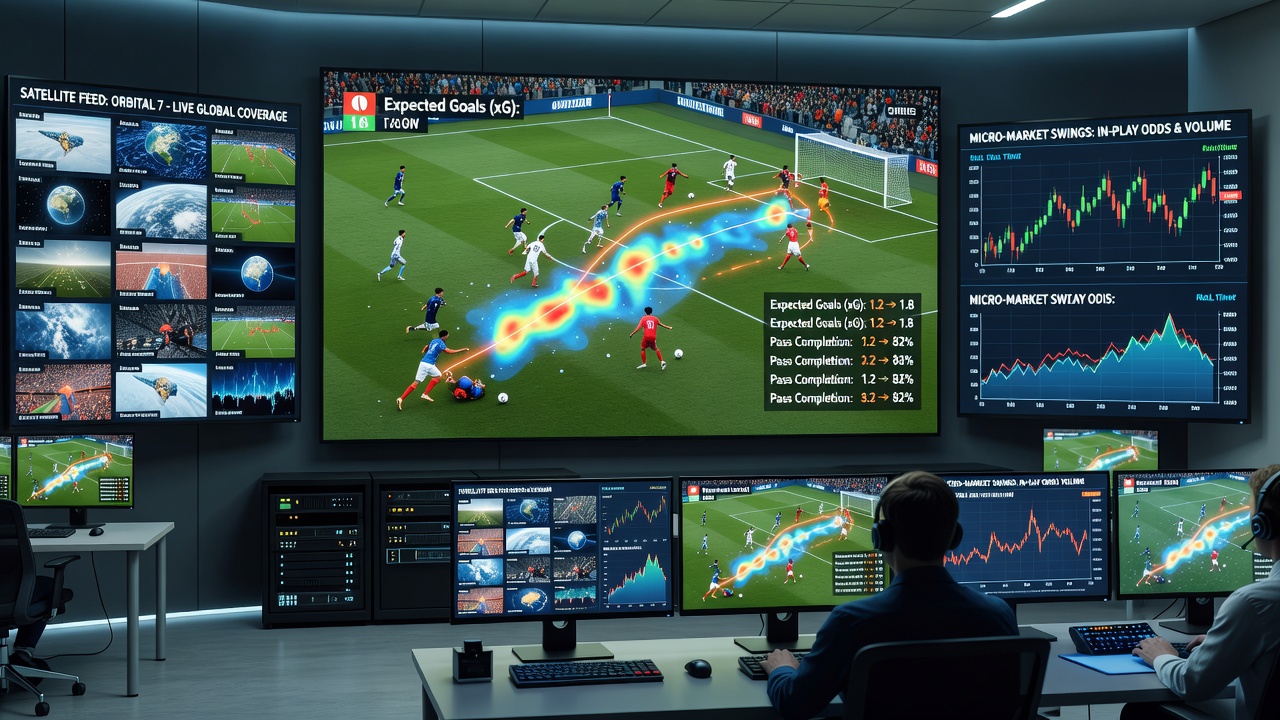
Micro-markets such as over-under cards, exact goal minutes, and individual player assists respond most visibly to satellite-derived updates. A sudden change in possession statistics or an injury flag detected via optical tracking can trigger a cascade of price movements across correlated bets. Industry reports from the European Gaming and Betting Association note that volume in these narrow markets has risen steadily since satellite latency dropped below one second in major leagues.
Bookmakers maintain separate risk engines that monitor satellite streams alongside traditional video. When a goalkeeper's positioning data indicates higher save probability, the engine recalibrates live handicap lines without human intervention. Traders still intervene for exceptional events like red cards, yet the baseline adjustments now occur automatically through the data pipeline.
Regional Variations in Data Adoption
North American sportsbooks have incorporated satellite feeds more rapidly than some Asian markets because of regulatory requirements for transparent odds sourcing. Canadian provincial regulators require operators to log the origin of each price change, creating an audit trail that satellite timestamps satisfy. Meanwhile, operators in Australia have tested hybrid systems that combine satellite with 5G fallback to maintain continuity during storms that disrupt single pathways.
League officials in several countries now mandate that clubs permit additional camera installations for data integrity. These requirements emerged after 2024 incidents where delayed feeds allowed certain platforms to post stale odds during critical match phases. The result has been a more uniform standard for transmission quality across continents.
Technical Challenges and Ongoing Solutions
Weather remains a persistent variable because heavy rain or solar interference can momentarily degrade satellite signals. Providers counter this by routing duplicate streams through different orbital slots and maintaining terrestrial microwave backups between nearby stadiums. Research published in the Journal of Sports Analytics indicates that such redundancy keeps average data loss below 0.3 percent during the 2025-2026 season.
Bandwidth costs also influence which markets receive the richest data layers. Smaller competitions often receive fewer camera angles, resulting in slower updates for niche props like throw-in counts. Larger tournaments attract greater investment, so their satellite pipelines include additional sensor fusion from wearables and goal-line technology.
Conclusion
Satellite infrastructure continues to underpin the speed and granularity of in-play football markets by supplying uninterrupted positional and visual data. As transmission protocols improve and regulatory frameworks adapt, the interval between on-pitch events and corresponding odds movements will likely shorten further. Observers tracking these developments note that the same orbital systems supporting live broadcasts now serve as the backbone for precise, event-driven wagering adjustments worldwide.