Machine Learning Algorithms Alter Wagering Dynamics in Niche Leagues
Written by Carlo Lange · Aug 15, 2026

Machine Learning Algorithms Alter Wagering Dynamics in Niche Leagues
Advanced computational techniques have begun reshaping how participants approach betting on lesser-followed competitions such as regional volleyball circuits, second-division basketball tournaments, and emerging esports divisions where traditional statistical tracking once lagged behind major events. These models process vast datasets from player tracking systems, historical match logs, and environmental variables that influence outcomes in leagues often overlooked by mainstream analysts.
Core Mechanisms Behind the Shift
Researchers at institutions including the University of Alberta have documented how supervised learning frameworks identify subtle correlations in performance metrics that escape conventional scouting methods, while reinforcement learning components simulate thousands of potential game scenarios to refine probability estimates for wagers placed on events like lower-tier handball matches or provincial cricket fixtures. Data from these systems flows into real-time dashboards that update odds recommendations during matches, allowing adjustments based on in-game variables such as fatigue indicators or tactical substitutions that occur in August 2026 tournaments across multiple continents.
Industry reports from the European Gaming and Betting Association highlight integration patterns where operators embed these algorithms into mobile applications, giving users access to predictive outputs derived from satellite weather data combined with venue-specific historical results. Observers note that such tools have expanded participation in markets tied to niche soccer divisions in South America and Asia, where granular player movement data now informs spread and total-based selections with greater frequency than in previous seasons.
Observed Changes in Bettor Behavior
Patterns emerging from platform analytics indicate that users increasingly favor smaller-stake, higher-volume approaches in these specialized leagues because the models surface opportunities in session-based markets or quarter-specific propositions that carry elevated variance. Those who have examined transaction records across operators report a measurable uptick in cross-league portfolio strategies, where bets on obscure tennis challengers get balanced against correlated outcomes in adjacent esports titles, all calibrated through ensemble methods that weigh thousands of input features simultaneously.
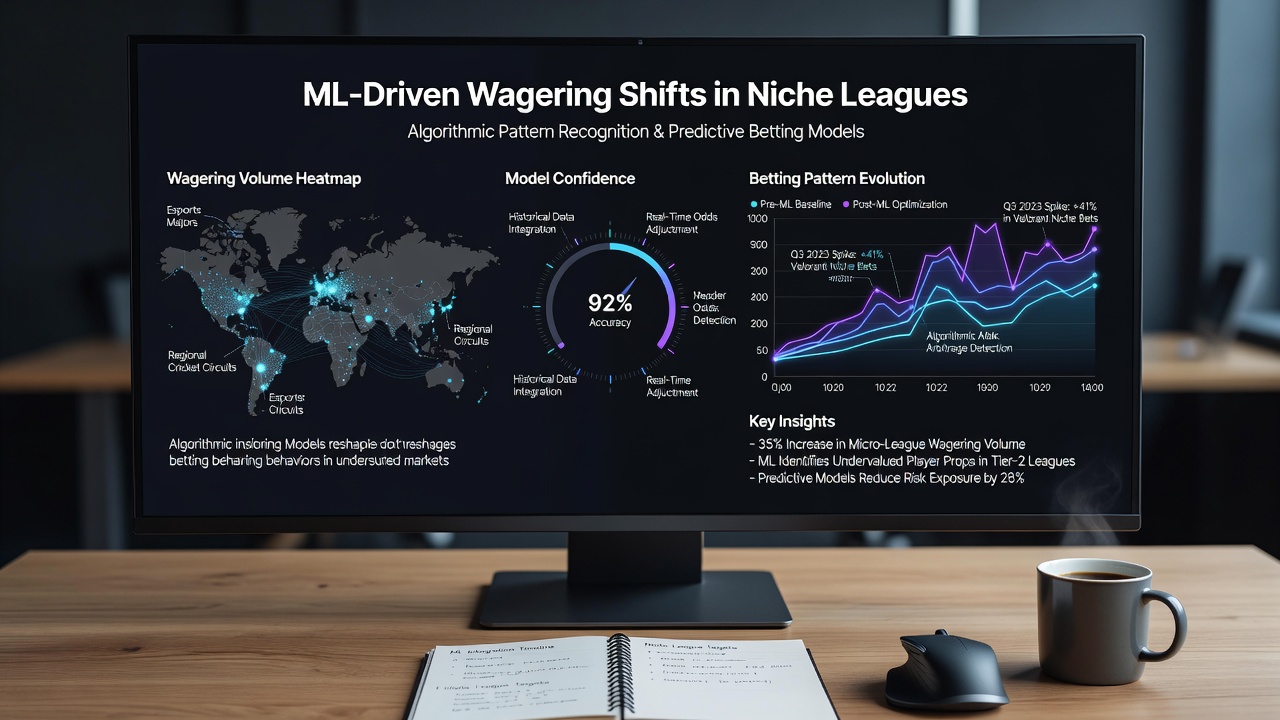
What's interesting is how these systems handle data scarcity in leagues with limited broadcast coverage, relying instead on optical tracking from practice sessions and social media sentiment signals scraped from public posts to fill gaps. A report from the Australian Institute of Criminology details similar deployments in regional rugby competitions, where models trained on injury databases and travel schedules have altered the timing of pre-match wagers among frequent participants. Meanwhile, regulatory filings from the Nevada Gaming Control Board show parallel adoption trends in North American minor league baseball, where algorithmic outputs now guide live betting interfaces during August 2026 doubleheaders.
Technical Implementation Across Regions
Operators deploy convolutional neural networks to parse video footage from amateur-level events, extracting metrics on shot accuracy or defensive positioning that feed directly into odds engines, while natural language processing modules scan post-match interviews for tonal cues that might indicate team morale shifts. Those who've studied deployment timelines note that cloud-based infrastructure has lowered barriers for smaller betting firms, enabling them to compete with larger entities by licensing pre-trained models rather than building proprietary systems from scratch. This approach has produced noticeable differences in market liquidity for niche events, with volume spikes recorded during mid-week fixtures in European futsal leagues and North American arena football contests.
Evidence from academic collaborations suggests that ensemble techniques combining gradient boosting with time-series forecasting deliver more stable projections when applied to leagues exhibiting high schedule irregularity, such as those affected by weather disruptions or venue changes. Participants using these outputs often structure their activity around identified edges in over-under totals rather than outright winners, reflecting the models' strength in quantifying scoring distributions under variable conditions.
Conclusion
Continued refinement of these algorithms points toward deeper integration with wearable sensor data from athletes in niche competitions, potentially expanding the range of predictable variables available for wagering decisions. As platforms refine their offerings through August 2026 and beyond, the emphasis remains on processing diverse data streams to support informed activity in markets that previously operated with limited analytical support.