Data Analytics Transforming Session Markets in T20 Cricket Leagues
Written by Katja Walter · Jul 25, 2026

Data Analytics Transforming Session Markets in T20 Cricket Leagues
Session markets in T20 cricket have evolved rapidly as teams and analysts apply advanced data tools to predict short-term outcomes like runs scored in specific overs or wickets in powerplay phases, and this shift gained momentum through 2026 with leagues expanding their statistical operations.
Leagues such as the Indian Premier League and the Big Bash League collect ball-by-ball data that feeds models capable of projecting probabilities for session bets during live matches, while analysts combine historical patterns with real-time inputs including pitch conditions and player fatigue indicators.
Core Elements of Session Markets in T20 Formats
Session markets focus on discrete segments of an innings rather than full match results, covering metrics such as runs in the first six overs or boundaries between overs ten and fifteen, and these segments create frequent decision points for participants who track evolving probabilities.
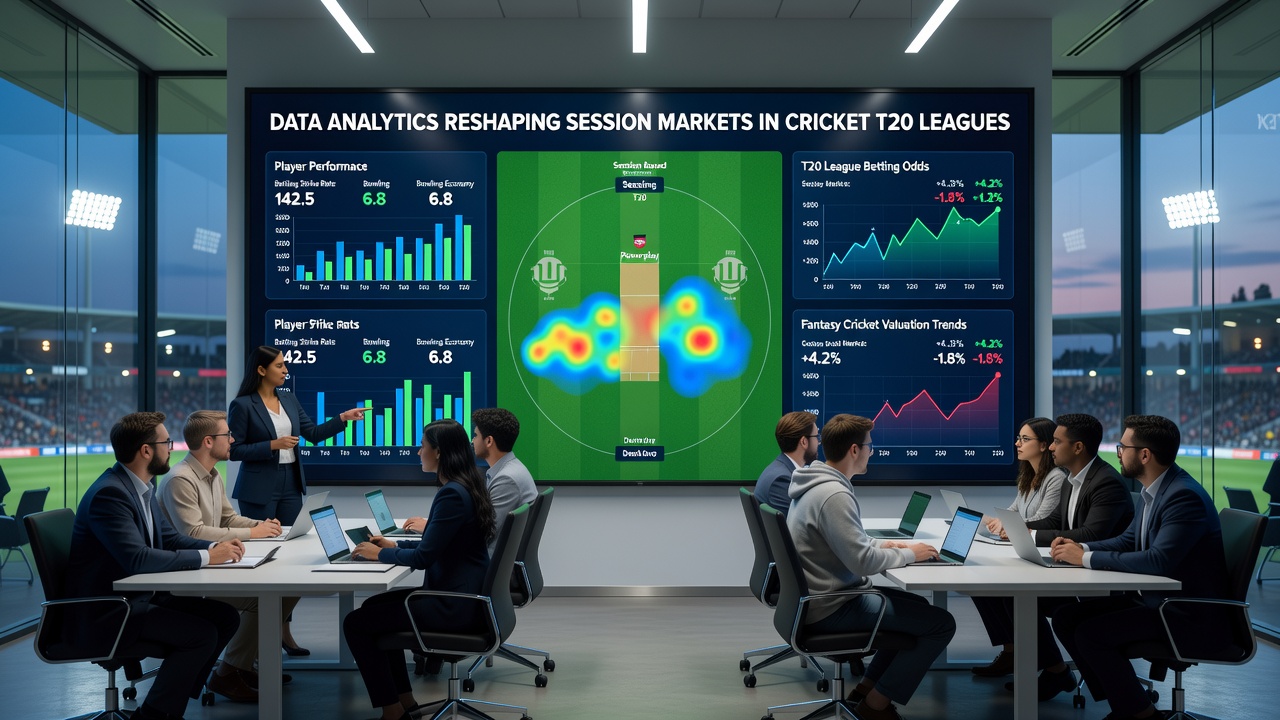
Data platforms now process variables including bowler economy rates, batsman strike rates against specific deliveries, and historical venue performances to generate updated projections that adjust after each ball, and leagues in multiple regions adopted standardized data feeds by mid-2026 to support consistent analytics across tournaments.
Integration of Advanced Analytics Tools
Cricket operations teams employ machine learning algorithms that ingest datasets from tracking systems like Hawk-Eye and ball-tracking sensors, which then calculate expected run rates for upcoming overs based on current match states and player matchups. Observers note that these models incorporate weather variables and dew factors that influence ball behavior during evening sessions, and several franchises reported improved accuracy in session forecasts after integrating multi-season datasets.
Research from sports science institutions shows that predictive models achieve higher precision when they layer player workload data with opposition-specific statistics, and this approach allows continuous refinement of session projections throughout a match. What's interesting is how leagues coordinate data sharing agreements that enable cross-tournament comparisons of session trends, particularly as T20 events proliferate in Asia, Australia, and the Caribbean during the 2026 calendar.
League-Specific Applications and Data Sources
The Indian Premier League expanded its analytics partnerships in 2025 and 2026 to include granular session tracking, and similar initiatives appeared in the Pakistan Super League where operators use comparable datasets to monitor over-by-over progressions. Analysts cross-reference these figures with external benchmarks such as those published by the Australian Institute of Criminology on sports data integrity, which provides regional context for performance modeling in southern hemisphere leagues.
Teams in the Caribbean Premier League apply localized pitch mapping combined with player biometric readings to adjust session expectations, and this method draws from studies conducted at universities in the region that examined environmental impacts on scoring rates. Data indicates that session market volatility decreases when models incorporate full historical innings breakdowns rather than isolated match samples, leading organizers to prioritize comprehensive archives for future seasons.
Technological Infrastructure Supporting Real-Time Updates
Cloud-based systems deliver live session probability updates to analysts and broadcasters, and these platforms integrate inputs from multiple sensors positioned around the field to capture velocity, spin, and trajectory details after every delivery. Leagues have invested in secure data pipelines that prevent latency issues during high-stakes matches, ensuring projections remain current as conditions shift.
Software frameworks now handle simultaneous calculations for multiple session categories within a single over, allowing rapid recalibration when unexpected events occur such as a batsman retiring hurt or a sudden rain interruption. Those who have studied implementation timelines observe that adoption rates accelerated after 2025 when several governing bodies mandated minimum data standards for all participating franchises.
Conclusion
Session markets in T20 cricket continue to incorporate deeper layers of analytics that draw on expanding datasets and refined algorithms, and this development aligns with broader trends across global leagues through July 2026. Organizations maintain focus on data quality and integration methods that support accurate short-term forecasting while preserving competitive balance across tournaments.