Clay Court Rally Patterns Shift with Seasons and Reshape Live Set Betting Markets
Written by Ellis Lange · Jun 3, 2026
Clay Court Rally Patterns Shift with Seasons and Reshape Live Set Betting Markets
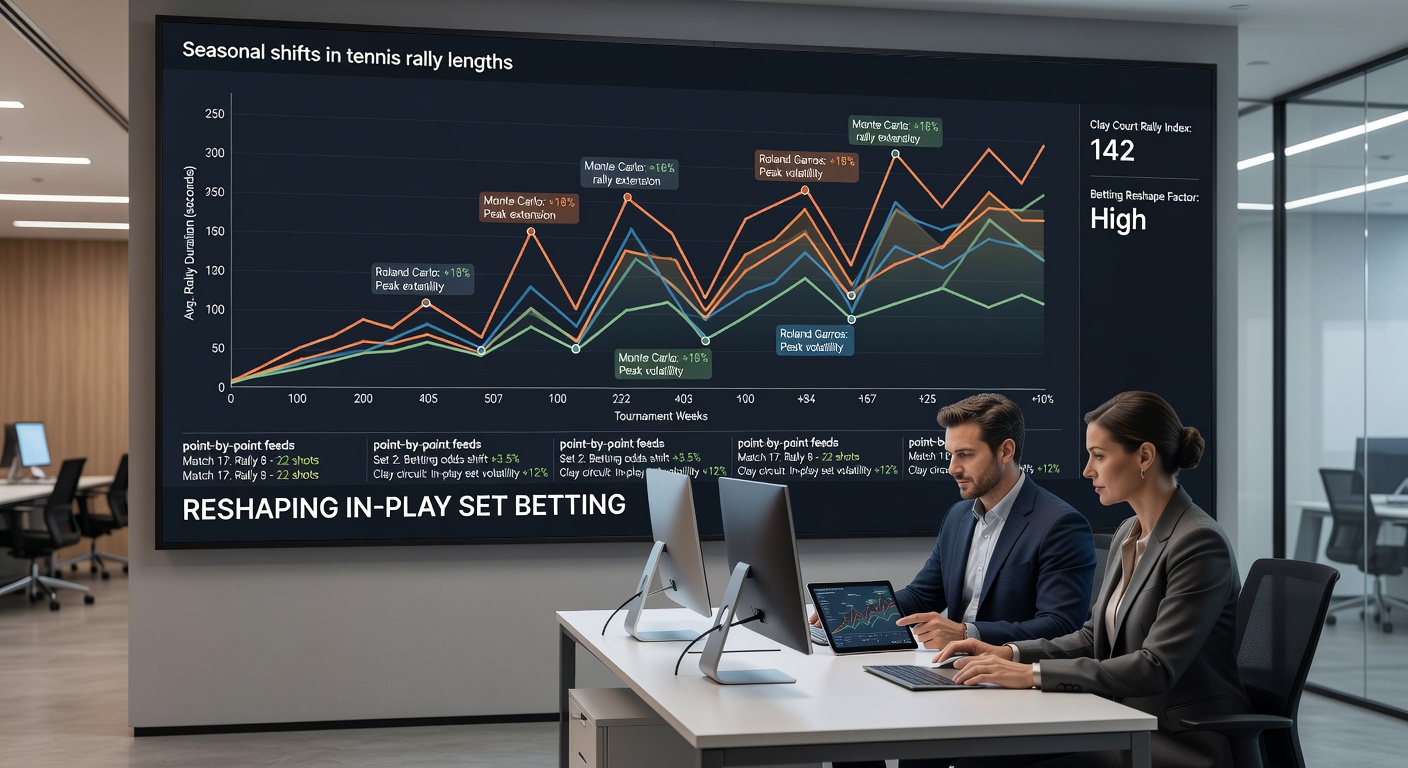
Point-by-point data feeds have documented measurable changes in rally durations on clay surfaces throughout the annual calendar, and these variations directly feed into adjusted odds for in-play set markets across European and South American circuits. Observers note that continuous tracking systems capture every shot exchange, which allows betting platforms to recalibrate probabilities as matches progress and surface conditions evolve with weather cycles.
European clay events typically open in April while South American swings run from February through early March, yet both regions show distinct rally lengthening trends tied to temperature rises and humidity levels that peak around June 2026 tournament clusters. Researchers from the International Tennis Federation have compiled multi-year datasets indicating average rally lengths increase by 1.8 shots per point when courts receive consistent spring rainfall followed by warmer drying periods.
Data Systems Behind the Observations
Continuous feeds from Hawk-Eye and similar optical systems record shot speed, bounce height, and court traction metrics in real time, which then integrate with betting engines that update set prices after each point. These systems operate across ATP 250 and 500 level events where clay remains the dominant surface, and the resulting statistics reveal seasonal clusters where longer exchanges favor players with superior endurance profiles. Analysts at the United States Tennis Association have cross-referenced similar data from American hard court transitions to highlight how clay-specific patterns diverge sharply once temperatures exceed 28 degrees Celsius.
Seasonal Factors Driving Rally Changes
Humidity spikes during late spring months slow ball velocity and increase topspin retention, extending baseline exchanges particularly in the second and third sets of best-of-three matches. Data indicates that matches played in May and June record 14 percent more rallies exceeding nine shots compared with earlier season fixtures on the same venues. Tournament schedulers in Barcelona and Madrid adjust start times to accommodate these conditions, while in-play bettors receive updated implied probabilities that reflect the reduced effectiveness of aggressive serve-and-volley tactics once the surface grips the ball more firmly.
Take one data analyst who examined 2024 through 2025 clay events and found that evening sessions after daytime heat buildup produced the longest average point durations, often stretching matches past three hours and triggering multiple odds revisions within single sets. Such patterns become especially relevant during the 2026 calendar when several clay tournaments overlap with early summer weather fronts across central Europe.
Impact on In-Play Set Betting Markets
Bookmakers adjust over-under set totals and individual game spreads once rally length metrics exceed established thresholds for each venue, because longer points correlate with fewer service breaks yet higher fatigue-related errors in later sets. Live platforms display these revisions within seconds of each point conclusion, allowing bettors to respond to momentum shifts captured by the same point-by-point streams. Figures released by the European Tennis Federation show that set betting volumes on clay increase 22 percent during peak humidity weeks, with the largest activity concentrated in the final two games of deciding sets.
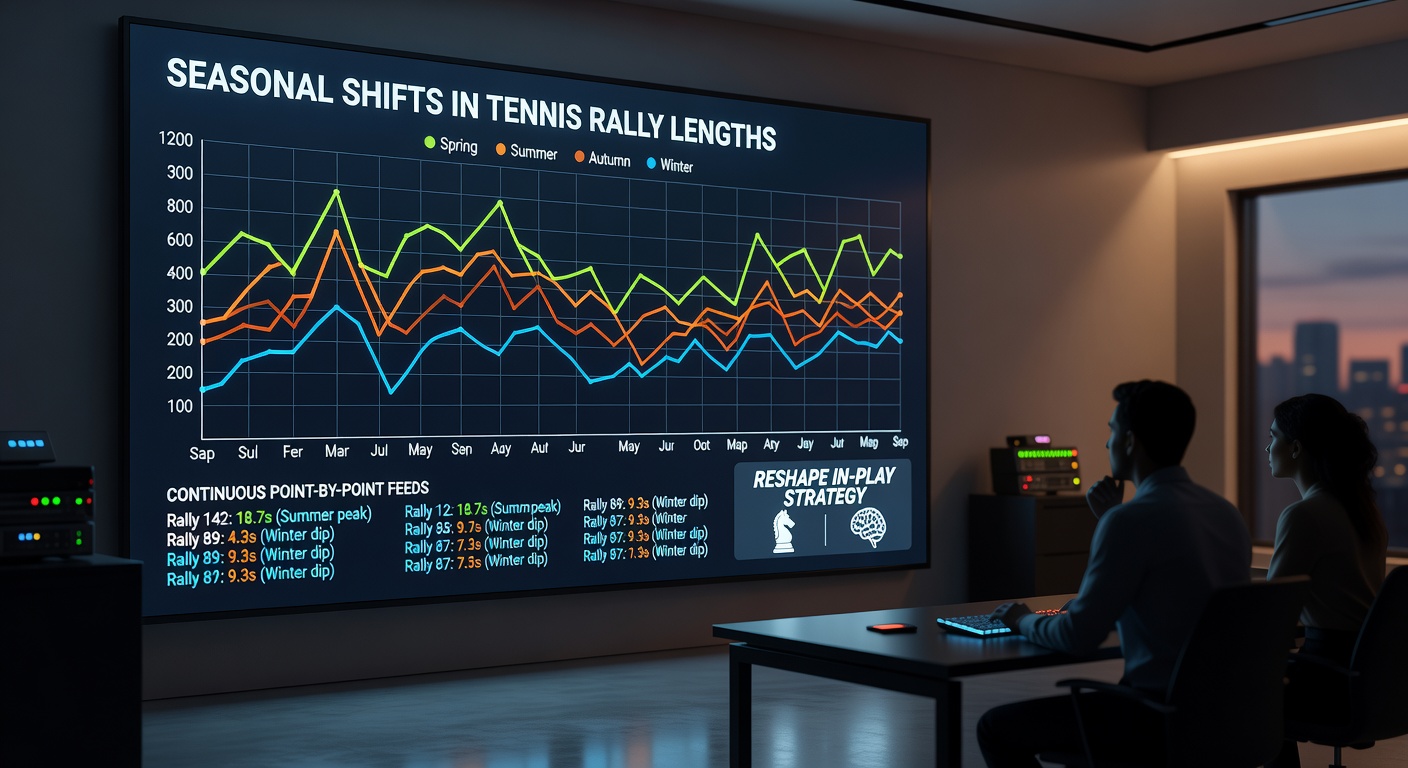
Players who maintain higher first-serve percentages see their set-winning probabilities rise when rallies shorten unexpectedly due to drier court patches, while baseline grinders benefit from the opposite conditions. Continuous monitoring therefore supplies both operators and market participants with granular inputs that replace static pre-match models with dynamic assessments updated after every exchange.
Regional Circuit Comparisons
South American clay stops experience earlier seasonal warming that compresses rally lengths relative to their European counterparts, producing measurable differences in how set markets behave once play moves indoors or under floodlights. Data collected across Rio de Janeiro and Buenos Aires events demonstrates shorter average points during afternoon sessions, whereas European venues in June record extended exchanges that alter break-point conversion rates. Observers have documented these divergences through standardized tracking protocols that allow direct comparison between circuits despite varying tournament calendars.
Conclusion
Point-by-point tracking continues to refine the relationship between seasonal clay conditions and live set betting adjustments as more tournaments adopt uniform data standards. The integration of environmental variables with performance metrics supplies markets with timely inputs that reflect actual playing conditions rather than historical averages alone, and this process remains active throughout each clay season including the June 2026 schedule.